
Cockroaches are one of the most frustrating pests you can deal with inside your home. You may clean your kitchen, take out the trash, wipe the counters, and still see one running across the floor at night. The good news is that you can control many light to moderate cockroach problems yourself when you use the right strategy.
The key is not just killing the roaches you see. You need to remove their food, water, hiding places, and entry points. You also need to use the right products in the right places. A confident DIY plan can reduce roach activity, stop the population from growing, and help you decide when professional pest control is worth the cost.
Cockroaches are more than a dirty-looking nuisance. Their body parts, saliva, and droppings can trigger allergies and asthma in sensitive people, especially in homes with ongoing infestations. That is why you should act quickly when you see signs of roaches.
First, Know What Attracts Cockroaches
Before you start treatment, understand what roaches want.
Cockroaches look for three things: food, water, and shelter. Your kitchen, bathroom, basement, laundry room, garage, and areas around appliances are common hot spots because they provide crumbs, moisture, warmth, and dark hiding places.
German cockroaches are especially common indoors in U.S. homes and apartments. They often hide behind refrigerators, stoves, dishwashers, cabinets, sinks, and small wall cracks. American cockroaches are larger and are often connected to drains, basements, crawl spaces, garages, and outdoor moisture areas.
Once you know where they are hiding, you can stop wasting time spraying random areas and start targeting the infestation directly.
Inspect Your Home at Night
Roaches are most active in the dark. Grab a flashlight and inspect your home at night. Check behind the refrigerator, under the sink, around the stove, inside cabinets, behind trash cans, near pet food bowls, around bathroom plumbing, and inside pantry corners.
Look for live roaches, dead roaches, small black droppings, egg cases, shed skins, and a musty smell. If you see baby roaches, that usually means the roaches are breeding inside the home.
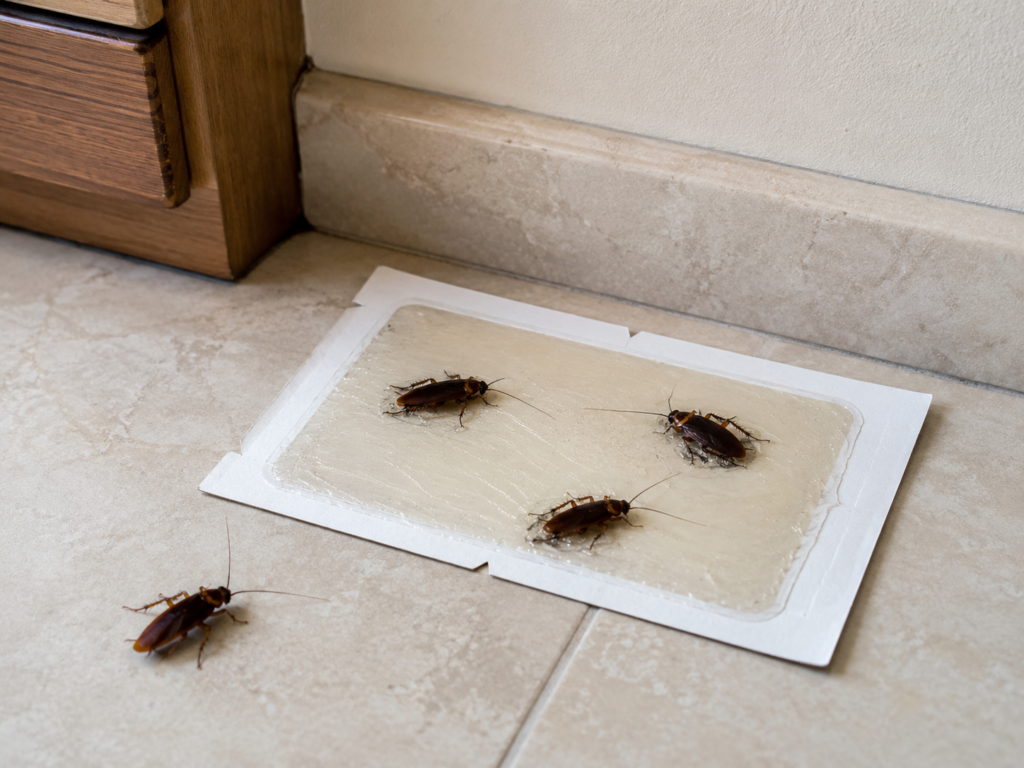
Place sticky traps in areas where you suspect activity. Sticky traps do not solve the infestation by themselves, but they help you find the worst areas. The EPA’s integrated pest management approach recommends monitoring and choosing lower-risk, targeted controls first, which is exactly why traps are useful before and during treatment.
Deep Clean the Kitchen
The kitchen is usually the main battle zone. Roaches can survive on tiny crumbs, grease, food residue, and spills. If food remains available, bait treatments may not work as well because roaches have other food choices.
Start by cleaning under and behind appliances. Pull out the refrigerator and stove if possible. Sweep, vacuum, and mop the floor. Clean grease around the stove, microwave, backsplash, toaster, and cabinet edges. Empty the toaster crumb tray. Wipe the inside and outside of trash cans.
Store cereal, flour, rice, snacks, sugar, pet food, and other dry goods in sealed plastic or glass containers. Do not leave dirty dishes in the sink overnight. Wipe counters every night before bed. Take trash out regularly and use a trash can with a tight lid.
This may sound simple, but it is one of the strongest DIY roach control steps. You are forcing roaches to rely on the bait instead of your food.
Remove Water Sources
Roaches need moisture. A few drops of water under the sink can keep them alive. Fix leaky faucets, dripping pipes, loose supply lines, and sweating plumbing. Dry the sink before bedtime. Do not leave wet sponges, dishcloths, or mop buckets sitting overnight.
Check under the refrigerator for condensation or a leaking drip pan. Look around the dishwasher, washing machine, water heater, and bathroom vanity. If your bathroom stays humid, use an exhaust fan and keep the area dry.
In apartments, shared plumbing walls can also support roach movement. If you live in a multi-unit building, sealing around pipes and reporting leaks quickly can make a big difference.
Declutter Roach Hiding Spots
Cockroaches love tight, dark hiding spaces. Cardboard boxes, paper bags, stacks of newspapers, old grocery bags, and cluttered cabinets create ideal shelters.
Remove unnecessary cardboard from your home. If you need storage, use sealed plastic bins instead. Declutter under sinks, pantry shelves, laundry areas, and closets near the kitchen or bathroom.
Pay attention to cardboard delivery boxes. Roaches and egg cases can sometimes hitchhike in boxes, especially if the boxes came from storage areas, warehouses, or shared mailrooms. Break boxes down and remove them quickly.
Seal Entry Points and Gaps
Roaches can squeeze through very small openings. Sealing gaps helps block new roaches from entering and reduces hiding places for the ones already inside.
Use caulk around baseboards, wall cracks, cabinet gaps, pipe openings, and spaces around plumbing under sinks. Add weatherstripping around exterior doors. Repair torn window screens. Seal gaps around utility lines, bathroom pipes, kitchen pipes, and laundry hookups.
In older homes, check the area where cabinets meet the wall. In apartments, focus on pipe penetrations, shared walls, and gaps around baseboards.
Sealing does not kill roaches already inside, but it strengthens every other control method.
Use Gel Bait Correctly
Gel bait is one of the most effective DIY tools for indoor cockroach control when used properly. Roaches eat the bait and return to hiding areas, where the treatment can affect more of the population. Modern integrated pest management programs often rely on gel baits and sticky traps because they are targeted and can reduce unnecessary broad pesticide exposure.
Apply small pea-sized dots of gel bait in cracks and crevices where roaches travel. Good spots include cabinet hinges, under the sink, behind the refrigerator, behind the stove, along cabinet corners, near dishwasher edges, and around plumbing openings.
Do not smear bait across open surfaces. Do not place bait where children or pets can reach it. Do not place bait directly on food preparation surfaces. Always follow the product label.
Most importantly, do not spray pesticide over or near the bait. Sprays can repel roaches and contaminate the bait, making them avoid it.
Try Bait Stations for Safer Placement
If you have children or pets, bait stations may be easier to manage than open gel bait. Place bait stations near roach activity areas, but keep them tucked away from food, dishes, and reachable surfaces.
Use them under sinks, behind toilets, behind appliances, inside cabinets, near trash areas, and in garage corners. Replace them according to the label. If the bait dries out or becomes dusty, it may stop attracting roaches.
Bait stations work best when the home is clean and dry. If crumbs, grease, and water are still available, the roaches may ignore the bait.
Use Sticky Traps as a Monitoring Tool
Sticky traps are not a complete treatment, but they are very useful. Put them along walls, under the sink, behind appliances, near the water heater, beside the refrigerator, and inside cabinets where you have seen activity.
Check the traps every few days. If one trap catches many roaches, that area needs more attention. Add bait nearby, clean the surrounding area, and look for cracks or water sources.
Sticky traps also help you measure progress. If you catch fewer roaches each week, your DIY plan is working. If trap counts stay high after two to four weeks, the infestation may be larger than you thought.
Use Boric Acid Carefully
Boric acid can help with roach control, but only when used correctly. The mistake many homeowners make is using too much. Roaches avoid heavy piles of powder.
Apply a very light dusting in hidden dry areas, such as wall voids, cracks, under appliances, and behind cabinets. Never apply boric acid on counters, dishes, food storage areas, pet areas, or anywhere children can touch it.
Do not use boric acid in wet areas because moisture reduces its effectiveness. Always read and follow the product label. More is not better. A thin, barely visible layer is the goal.
Consider Diatomaceous Earth in Dry Areas
Food-grade diatomaceous earth is another DIY option for cracks, voids, and dry hiding places. It works by damaging the insect’s outer layer, but it must stay dry to remain useful.
Apply it lightly behind appliances, inside wall gaps, under cabinets, or in garage corners. Avoid breathing the dust during application, and do not apply it where it can become airborne or contaminate food surfaces.
Like boric acid, this is a support method, not a complete solution by itself.
Vacuum Roaches and Egg Cases
A vacuum can quickly reduce visible roaches, droppings, shed skins, and egg cases. Use a hose attachment to clean cracks, cabinet corners, baseboards, pantry edges, under appliances, and drawer tracks.
After vacuuming, empty the vacuum contents outside into a sealed trash bag. Clean the vacuum canister if needed. Vacuuming is especially useful before baiting because it removes competing food particles and allergens.
Avoid Foggers and Roach Bombs
Many people buy foggers because they want a fast solution. In most roach infestations, foggers are not the best choice. They often fail to reach deep cracks where roaches hide. They can also push roaches into walls or neighboring rooms.
Foggers may create unnecessary pesticide exposure inside the home, especially if used incorrectly. For roaches, targeted baiting, sanitation, sealing, and monitoring are usually smarter than filling the room with pesticide.
Be Careful With Contact Sprays
A contact spray can kill a roach you see, but it usually does not solve the infestation. Sprays may also interfere with bait if applied in the same area.
If you use a spray, use it only for direct contact or specific labeled crack-and-crevice use. Do not spray food surfaces, dishes, toys, pet bowls, bedding, or areas where children play. Avoid spraying near bait placements.
For long-term control, bait is usually more effective than chasing individual roaches with spray.
Use Natural Methods Realistically
Some natural methods can support your plan, but they should not be your only strategy. Soap and water can kill roaches on direct contact, but it does not treat the hidden population. Essential oils may repel some insects temporarily, but they are not reliable for eliminating an infestation. Baking soda mixtures are often discussed online, but results are inconsistent.
You can use natural cleaning and prevention methods confidently: remove crumbs, seal food, reduce moisture, declutter, vacuum, and seal gaps. But for an active infestation, you will usually need traps, bait, or professional treatment.
Do Outdoor Roach Prevention
If large roaches are entering from outside, focus on your home’s exterior. Move firewood, leaves, mulch, and debris away from the foundation. Trim bushes and plants so they do not touch the house. Keep gutters clean. Reduce moisture around crawl spaces, drains, and foundation walls.
Make sure exterior doors close tightly. Use door sweeps. Seal gaps around pipes, vents, and utility lines. Keep outdoor trash cans closed and away from entry doors.
For garages, sweep regularly, remove cardboard, seal stored pet food, and avoid leaving trash bags inside overnight.
Handle Apartment Roaches Differently
In apartments, roach control can be harder because roaches may move between units through plumbing, walls, shared trash rooms, and hallways. You can still improve your unit, but you may need building-wide cooperation.
Clean and seal your unit carefully. Use sticky traps to document activity. Take photos if needed. Report the problem to property management early. Ask whether nearby units are being inspected or treated.
If only your apartment is treated while the neighboring source remains active, roaches may return.
Know When DIY Is Not Enough
DIY cockroach control works best for early or light infestations. You should consider professional help if you see roaches during the day, find many baby roaches, smell a strong musty odor, continue catching roaches after several weeks of treatment, or live in an apartment where roaches keep returning.
You should also move faster if someone in the home has asthma, allergies, a weakened immune system, or if the infestation is in a kitchen where food contamination is a concern.
Professional pest control companies can use a stronger inspection process, commercial-grade baits, insect growth regulators, exclusion methods, and follow-up treatments. This is often the fastest way to control a serious German cockroach infestation.
How Much Does Cockroach Pest Control Cost?
The cost depends on your home size, infestation level, location, treatment method, and whether follow-up visits are needed. A small, early roach problem may cost much less than a heavy infestation in a multi-room home or apartment.
That is where PestControlPrice.com can help. Instead of guessing, you can use the pest control price calculator to estimate what cockroach treatment may cost in your area. You can compare your DIY spending against the likely cost of hiring a professional.
If you have already bought sprays, traps, powders, bait stations, and cleaning supplies, the cost can add up quickly. Sometimes DIY is cheaper. Sometimes professional treatment saves money by solving the problem faster.
Final DIY Cockroach Control Checklist
Here is the simple plan you can follow:
Inspect at night with a flashlight. Place sticky traps in active areas. Deep clean the kitchen and remove grease. Store all food in sealed containers. Fix leaks and remove standing water. Declutter cardboard and paper. Seal cracks, pipe gaps, and baseboards. Use gel bait or bait stations correctly. Avoid spraying near bait. Vacuum roaches, droppings, and egg cases. Monitor progress weekly. Call a professional if activity does not drop.
You can get rid of roaches when you attack the real source of the problem. Do not rely on one spray or one trap. Use a complete system: clean, dry, seal, bait, monitor, and repeat.
Cockroaches are persistent, but they are not unbeatable. With the right DIY plan, you can take control of your home. And if the infestation is bigger than expected, PestControlPrice.com can help you estimate professional cockroach treatment costs before you book service.